// PROJECT · Handed off · Jun 2024 – Aug 2025
Kestrel
Autonomous videography drone built by a student team, sponsored by Blue Origin.
Project Lead / Pathing Team Lead · ACM at UCF · Sponsored by Blue Origin
- mAP
- 23.64%mAP
- Rank-1 accuracy
- 35.34%Rank-1 accuracy
- Rank-5 accuracy
- 48.99%Rank-5 accuracy
- Best-case flight time
- 40 minBest-case flight time
- Maximum speed
- 40 mphMaximum speed
Overview
An autonomous drone project leveraging modern robotics, computer vision, and embedded systems to achieve intelligent flight and person-tracking capabilities using a modular ROS 2 stack and on-board edge AI computing.
What I did
- Defined system architecture and data pipelines across sensing, perception, and control; applied systems engineering practice to coordinate subteams and delivery.
- Designed a MobileNetV3 CNN integrated into a DeepSORT model, achieving 23.64% mAP, 35.34% Rank-1 Accuracy, and 48.99% Rank-5 Accuracy.
- Designed and simulated the custom Kestrel drone, achieving a best-case flight time of 40 min and a maximum speed of 40 mph. Sensor suite included a camera on a dual-pivot mount, 16 short-range ToF sensors, and 4 long-range LiDAR sensors for obstacle detection.
Architecture
- Modular ROS 2 Jazzy stack across perception, path planning, flight control, and base-station communication.
- D* Lite planner over layered costmaps.
- YOLO detection with DeepSORT tracking and a MobileNetV3 triplet-loss re-identification model running on a Jetson Nano.
- ArduPilot with MAVLink and a Pixhawk flight controller.
- Gazebo and SITL simulation for path planning and obstacle avoidance testing.
Stack
- ROS 2
- Python
- C++
- ArduPilot
- MAVLink
- Gazebo
- YOLO
- DeepSORT
- MobileNetV3
- Jetson Nano
- Docker




Timeline
Kestrel Test Flights
These test flights showcased the DeepSORT system for object tracking, the obstacle avoidance system and flight pathing system, and finally the base station communication. Everything was successful and showed a promising wrap-up for the project.
Project Handoff
As I began my capstone project, VITALS, I chose to hand off the project to ACM and the leadership I put in position to continue the implementation of the research and continue working towards test flights and wrapping up the project.
Finalize Project Structure and Roles
Moving into the summer of 2025, the project underwent restructuring within the leadership and the structure of the club support. Before 2025, we were mainly supported by the ACM club as well as other smaller clubs. With the help of some dedicated members within ACM, we were able to acquire a partnership within the IEEE club at UCF, acquiring many skilled Electrical and Computer Engineers to help advance the project in aspects that were lacking.
Blue Origin sponsorship
Applied for Blue Origin Technical Project Sponsorship and was rewarded a 1000 dollar sponsorship as well as technical mentorship to help advance the project forward.
Project kickoff
This was the first meeting for Project Kestrel. This Meeting was held through the Association for Computing Machinery (ACM) club at UCF, as well as publicized through the AI@UCF club, and later on partnered with several other clubs. In this meeting, we reviewed TensorFlow's introductory YouTube videos on how CNN's work and provided a simple introduction to the project's goal, vision, and timeline.
Gallery
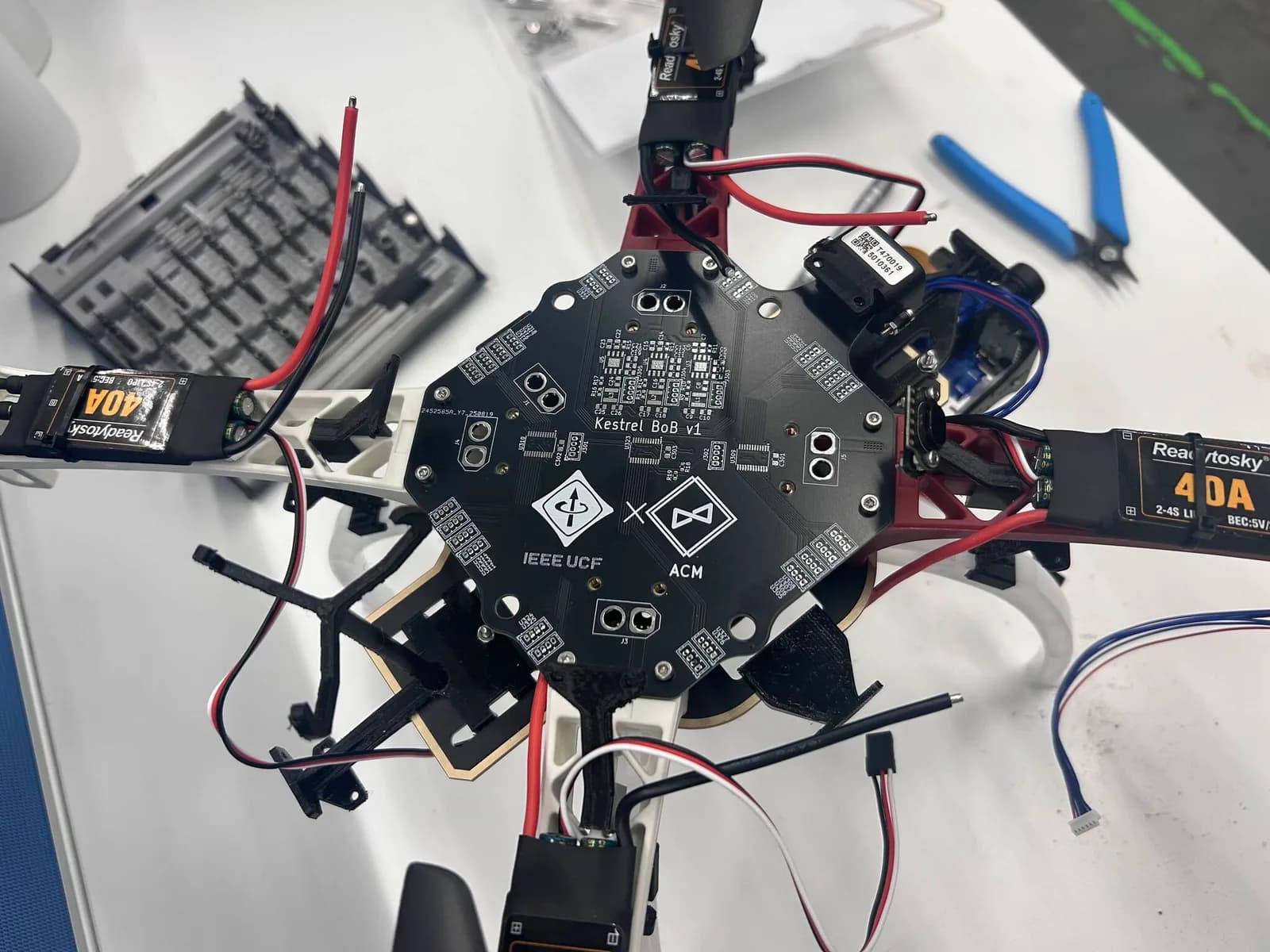
The Kestrel BoB v1 board mounted on the airframe. 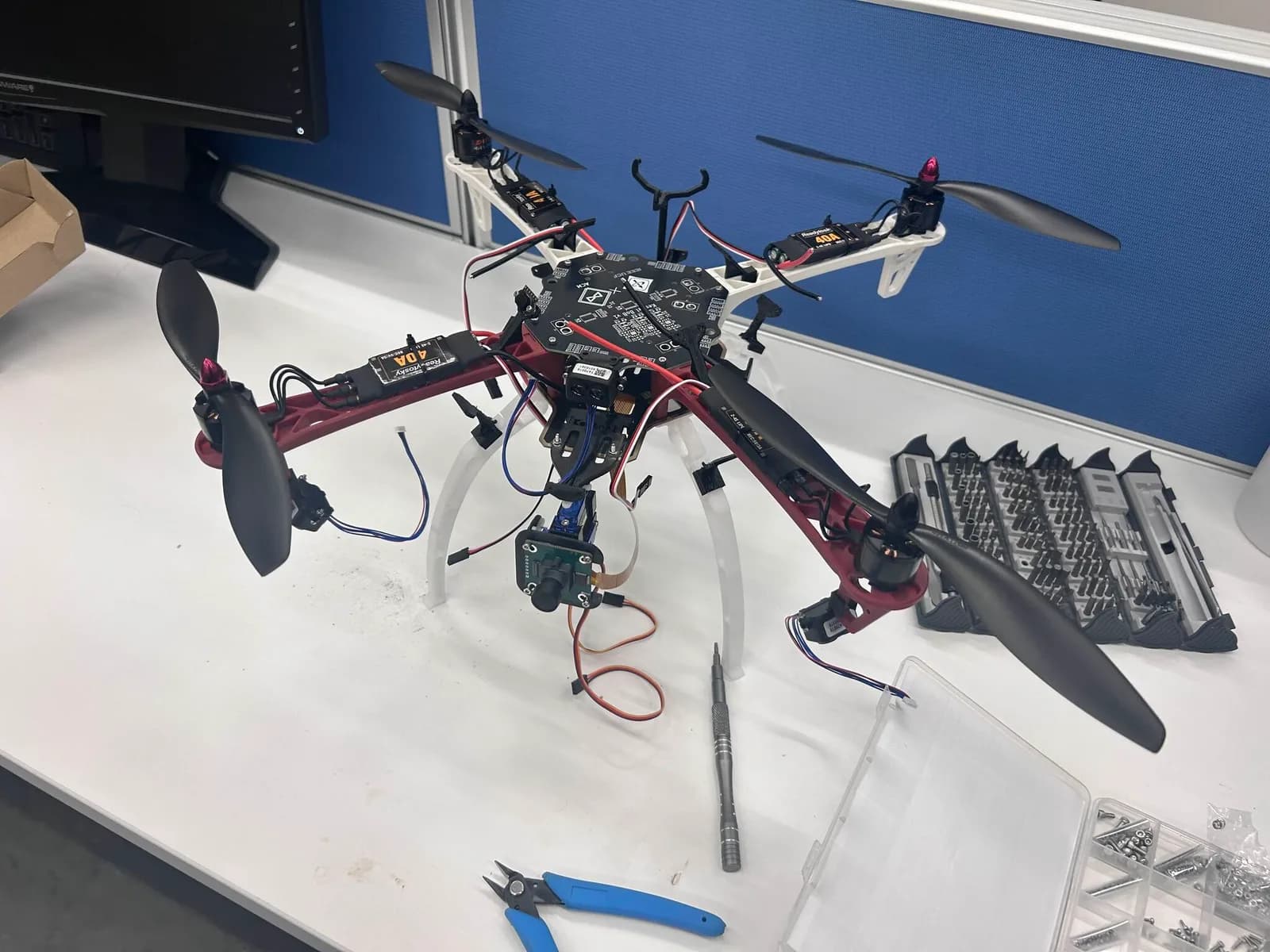
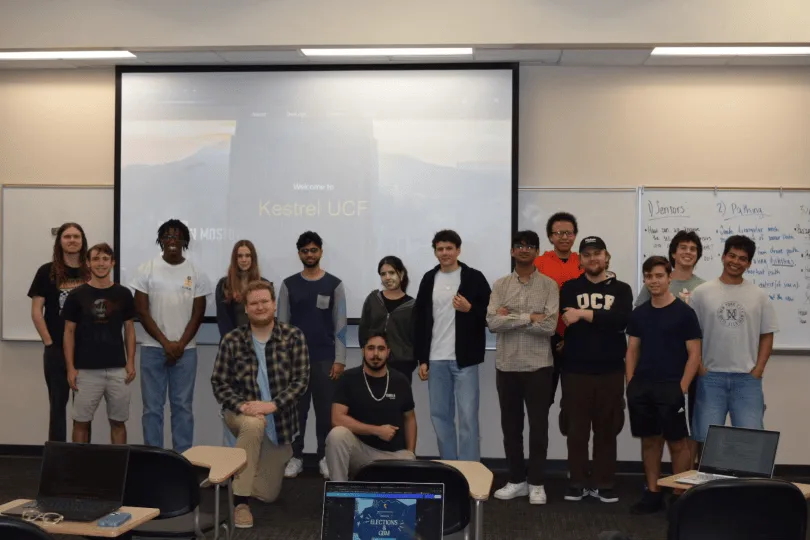
The assembled Kestrel quadcopter. The Project Kestrel team. 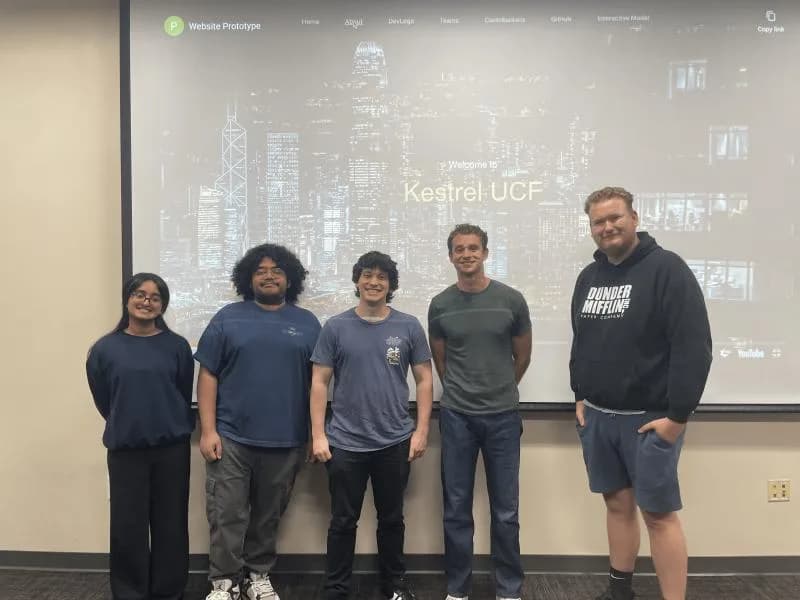
Kestrel team leads. 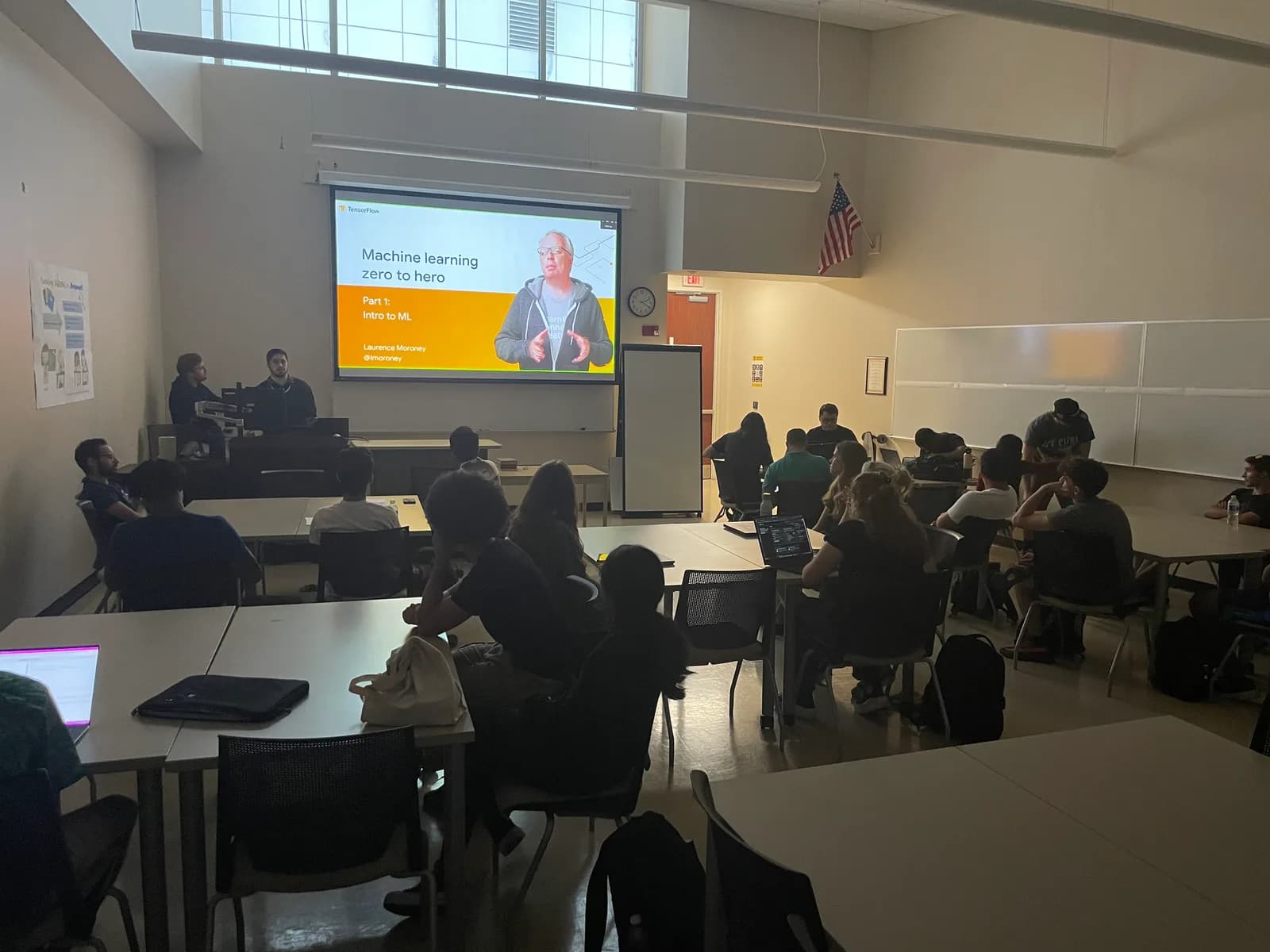
The first Project Kestrel meeting. 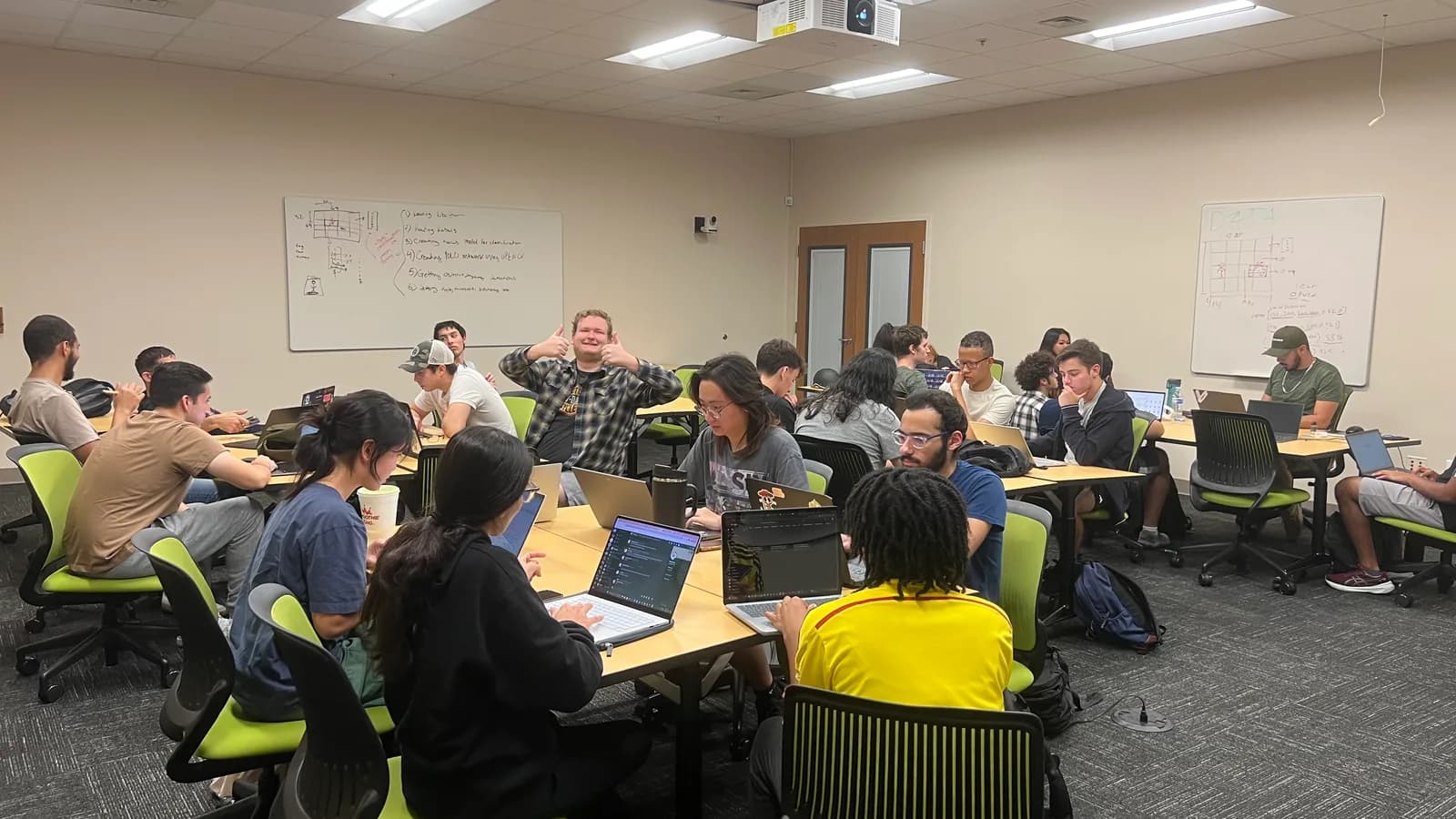
A working meeting.
Documents & video
Kestrel exploded view.